Walk into a small kitchen and the first thing you notice isn't the countertop or the tile. It's the wall. Upper cabinets sit there like a solid block, closing the room in. Swap them for open shelves and the same ten feet of wall suddenly breathes. That's the trade, and it isn't a small one.
The honest answer to which works better is: it depends on what you cook, how you clean, and whether you plan to sell. Here's how to weigh it without tearing your kitchen apart twice.
Upper cabinets are typically 12 to 13 inches deep and run to the ceiling or stop just above the backsplash. In a galley kitchen under eight feet wide, that mass of doors can make the room feel like a corridor.
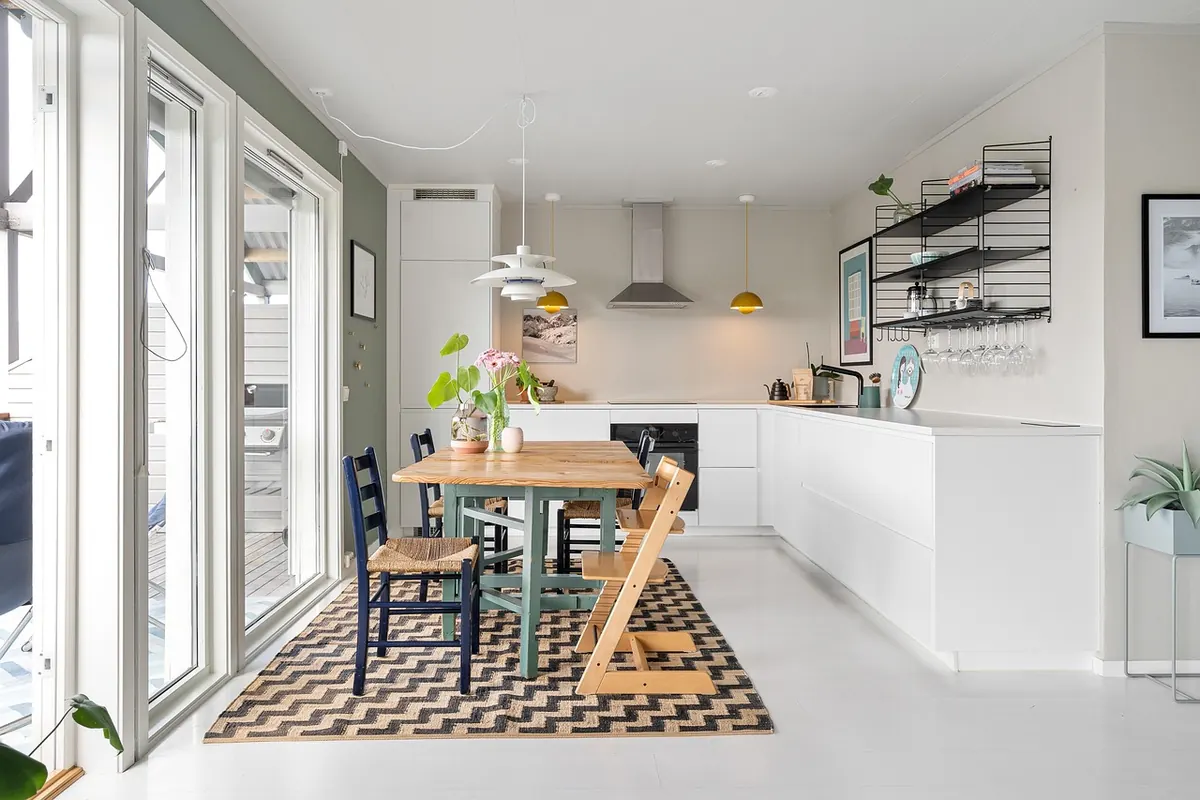
Open shelves, usually 8 to 10 inches deep, do two things at once. They give your eye a clear line to the back wall, so the room reads larger, and they turn the wall into display space. What they don't do is swallow your clutter. Everything on them is visible, every day.
That's the core tension. Open shelving buys visual space and spends your patience. Closed cabinets buy tidiness and spend visual space. In a small kitchen, you're choosing which currency you'd rather pay in.
Two shelves hold less than a cabinet of the same height. Not a little less — meaningfully less.
If your small kitchen already makes you move the stand mixer to reach the toaster, removing upper cabinets will hurt. Count your upper-cabinet contents first. Pull everything out, group it by how often you use it, and see how much is daily versus occasional. Daily items are good candidates for shelves. Occasional items — the turkey platter, the punch bowl, the fondue set — need a door between them and the room.
Open shelves collect dust. Near a range, they collect grease too, and grease plus dust makes a thin film that's harder to wipe than either one alone.
The variable is distance and cooking style. Shelves three feet from a gas burner used for high-heat frying will need attention far more often than shelves across a galley aisle. If you cook with oil most nights, plan on wiping shelf edges and the bottoms of plates every week or two. If that sounds like a chore you'll skip by week three, take that as real information rather than a character flaw.
Closed cabinets don't stay clean. They stay hidden. A wipe-down twice a year handles most of it, because dust and airborne grease settle on the exterior and, in smaller amounts, on the shelves inside.
Open shelving works when what's on it is worth looking at. The kitchens that look calm and expensive tend to follow a few rules:
Stack plates in threes and fours, not tens. Line mugs in a single row. Stand cookbooks upright with the spines out. None of this is complicated, but it is maintenance. A shelf that looked styled in March looks like a yard sale by June if nobody resets it.
Buyers in a small kitchen are counting storage. They open cabinet doors and look inside. Fewer doors can read as fewer places to put things, even when the room shows better.
That doesn't mean open shelving hurts resale — a cramped, dark kitchen hurts resale. It means the trade should be deliberate. Keeping closed uppers on at least one full wall preserves the storage story. Opening up the wall above the sink or along a short run gets you the light without giving up every door.
If you plan to sell within a couple of years, favor changes that reverse easily. Shelves on brackets leave screw holes, not a demolition. Removing cabinets, patching drywall, moving outlets, and repairing the backsplash is a bigger commitment. A local real estate agent can tell you what buyers in your area respond to, which beats guessing.
Few small kitchens need an all-or-nothing answer. A mix usually wins:
Glass-front cabinets sit in the middle. They keep dust out while showing off glassware and pretty dishes. If your cabinets are already installed, swapping solid doors for glass is often cheaper and less disruptive than new shelving.
Do this before you buy brackets or order doors. Empty your uppers onto the counter and sort into three piles: used daily, used weekly, used rarely. If the daily pile is mostly glasses, mugs, plates, and a few jars, open shelves will serve you well. If it's bulky appliances and half-empty boxes, keep the doors.
Then be honest about cleaning. Stand in the kitchen with a damp cloth in your hand and ask whether you'd wipe those shelves this Sunday, and the one after that. If yes, go open on the wall that needs the light most. If no, keep closed cabinets and brighten the room another way: a lighter door color, under-cabinet lighting, or a short run of shelves small enough to stay tidy.
Either choice works in a small kitchen. The failure mode is choosing the look without the habits that keep it looking good.
Photo: 23555986 / Pixabay