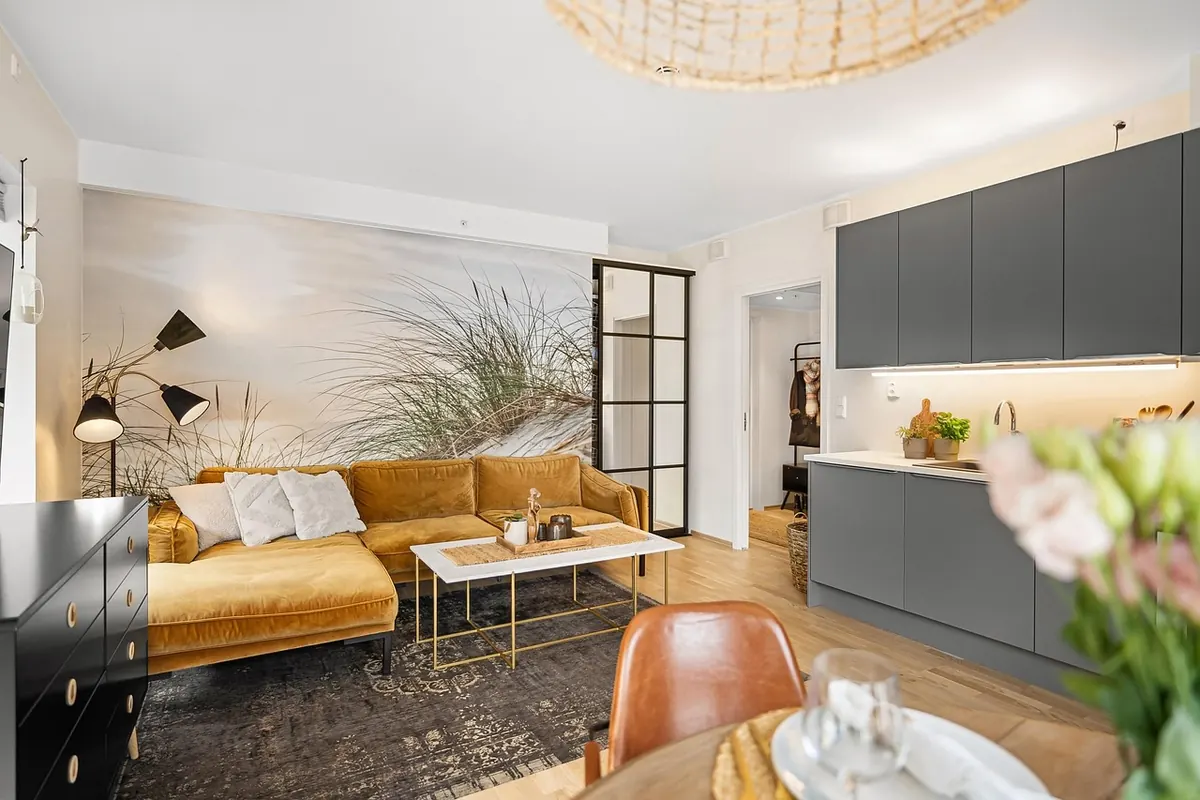
You have found the sofa. The color is right, the cushions are firm, and it is on sale until Sunday. Before you hand over a card, spend fifteen minutes with a tape measure. A sofa that suits the room but not the hallway is a problem no return policy solves gracefully, and the moment a delivery crew stops in the stairwell and shakes its head is a moment worth avoiding.
Measuring is not complicated. It is a short list of things to check, done in order, with a pencil and a piece of paper.
Measure the length and width of the room at floor level, then repeat each measurement at the opposite end. Older houses are rarely square, and a wall that reads 12 feet at one corner may read 11 feet 8 inches at the other. That missing four inches can be the difference between a sofa that sits flush and one that crowds a doorway.
While you have the tape out, note what else occupies the floor and the walls: windows, doors, radiators, floor vents, a fireplace, a built-in bookshelf. Sketch the room on graph paper, one square per foot, and draw those fixed elements in place. A simple plan view will tell you more about sofa size than any showroom.
Mark the outlets and light switches too. Blocking a switch with a sofa arm is a small annoyance you will notice every single day.
A ten-foot wall does not always give you ten feet of usable space. Measure the clear run between obstacles — the door trim, a radiator pipe, the edge of a window casing, a sloped ceiling that dips toward the floor. If a closet door needs three feet to swing open, that space is not available to furniture.
Sofas are deeper than most people expect. A typical three-seater runs about 84 inches wide and 36 to 38 inches deep, and a reclining model needs several inches of clearance behind it to fully extend. If you want a console table or a floor lamp behind the sofa, add that depth to your calculation now rather than discovering it later.
Floating a sofa away from the wall is a lovely look in a large room, but it costs floor space. Leave at least 30 inches behind it for a comfortable walking path, or accept that people will turn sideways to get past.
This is the step that separates a sofa that works from one that merely fits. Furniture is only half the picture; the other half is the space left over for people.
Draw these paths on your floor plan as shaded bands. Suddenly the sofa's maximum length becomes obvious. In a narrow living room, a 90-inch sofa with two side tables can choke a 12-foot wall, while an 84-inch sofa with one slim table and a floor lamp leaves room to breathe. Think in compositions, not single pieces.
The sofa must travel from the street to the spot you have planned for it. Measure the whole route, not just the front door.
Measure the door frame rather than the door itself, and remember that a sofa is a three-dimensional object moving through a two-dimensional opening. A 90-inch sofa can pass through a 32-inch doorway, but only if the hallway beyond is long enough and the frame is not in the way.
If the sofa arrives boxed or in modular pieces, ask the retailer for the boxed dimensions as well as the assembled ones. Flat-packed pieces can go through spaces a finished sofa never could.
Painter's tape is the cheapest sofa-sizing tool there is. Mark the full outline on the floor, including the chaise or the reclined position, then live with it for a day or two. Walk past it in the dark. Sit inside the outline and see whether the proportions feel right from the doorway. Check that the sofa will sit on your rug rather than half on and half off, and that lamps and side tables still land where you want them.
Write your measurements down, photograph the room from a few angles, and take both with you to the store — showroom floors are deceptive, and a sofa that looks modest there can read enormous at home. Ask how delivery works: some companies measure the route themselves, others leave the sofa at the door, and a few will not take it upstairs. Keep the packaging until the sofa is in place.
And if the numbers say it will not fit, believe them. The right sofa is not the prettiest one in the showroom; it is the one you can get through the door, set against the wall, and walk around without thinking about it ever again.
Photo: Deon Black / Pexels