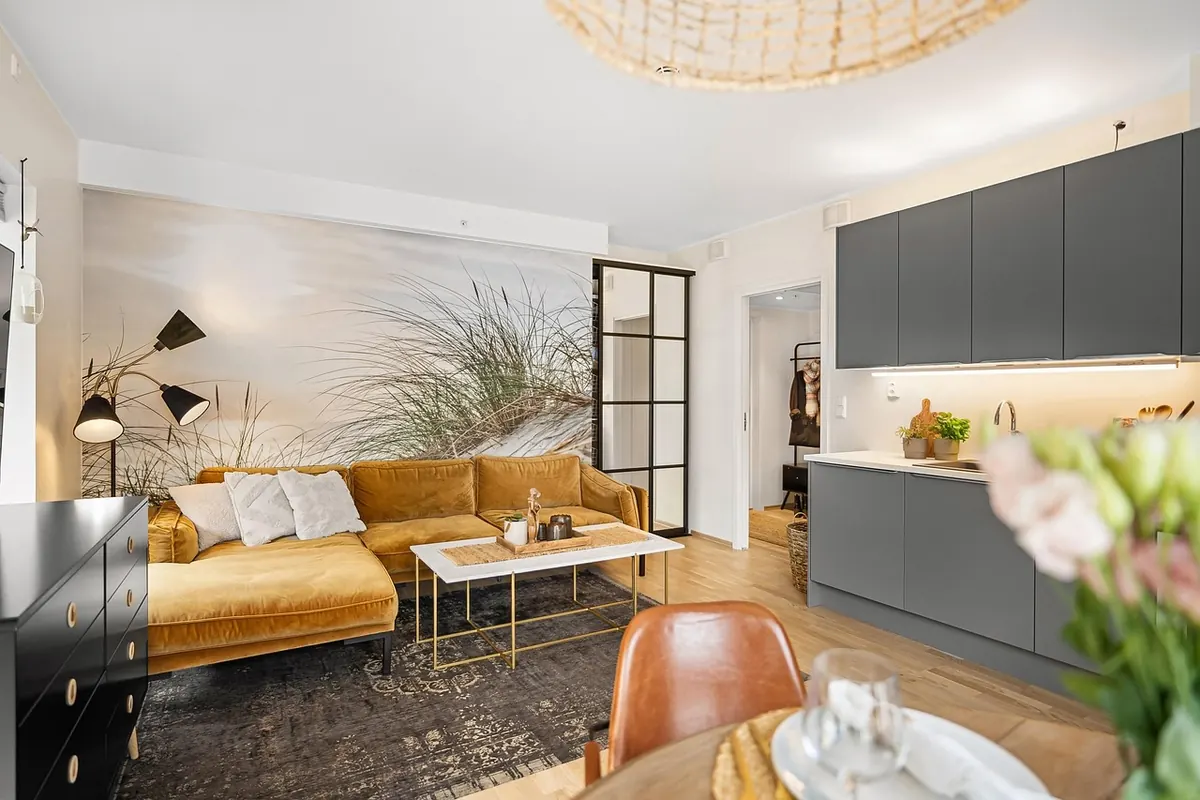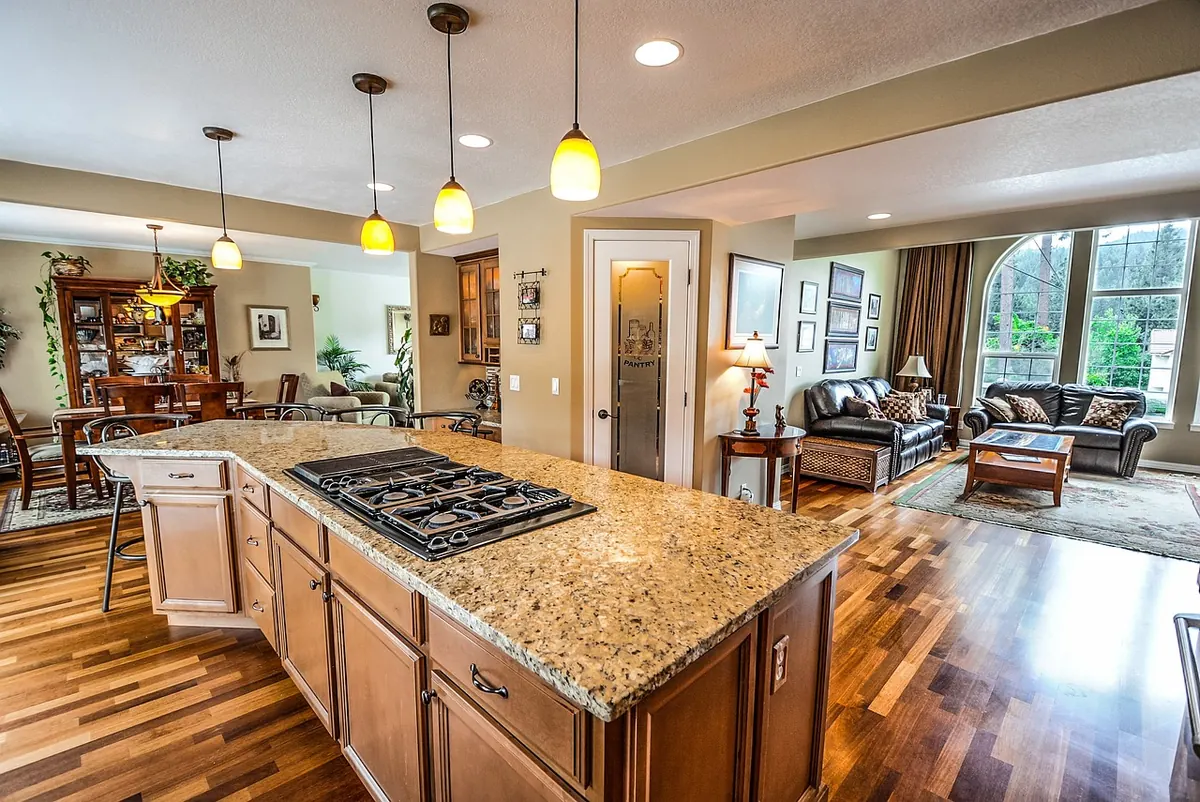
A room that feels cramped is rarely just a small room. It's usually a room whose furniture is working against it. The same twelve-by-fourteen living room can feel tight and jumbled or calm and generous depending on where four or five pieces sit. Layout mistakes are quiet ones: you don't walk in and think "the sofa is too far from the chairs," you just notice that nobody ever sits there. Most of these problems take an afternoon to fix, not a renovation budget.
The instinct makes sense. Clear the middle of the floor, and the room will feel bigger. In practice it does the opposite. Furniture lined up along all four walls leaves a wide, purposeless stripe of floor in the center and puts your seating so far apart that conversation requires raising your voice. The result reads as a waiting room rather than a living room.
Pull the main seating group inward. Even eight to twelve inches of space behind a sofa changes how the whole arrangement reads, and it often gives you room for a slim console, a floor lamp, or a basket of throws behind it. That said, floating furniture isn't a law. In a narrow row house or a tight apartment, if pulling the sofa forward would leave less than about three feet of walking room behind it, keep the sofa where it is and float a chair or two instead.
Stand at your doorway and walk to the next room the way you do every day, carrying something in both hands. If you have to turn sideways, scoot past a chair, or thread between a coffee table and an ottoman, the room will feel crowded no matter how much floor space it has.
Treat main walkways as non-negotiable. As a rule of thumb, leave roughly 30 to 36 inches for the routes people take between doorways, and about 18 inches between a sofa and coffee table — enough to sit down, stand up, and put a mug on the table without knee-bumping. Secondary paths, like the gap between a chair and a bookcase, can be narrower.
If a piece of furniture has to be moved every time someone walks through, it's in the wrong place.
A sofa facing sideways, two chairs pointing at nothing, and a coffee table stranded in the middle: this is what happens when furniture is placed by wall availability rather than by purpose. Every seating area needs a focal point — a fireplace, a window with a view, a television, a large piece of art, even a piano. Once you choose it, arrange the seating so most pieces can see it without craning.
Keep the group tight. A conversation circle roughly eight to ten feet across feels intimate; much wider and people end up leaning forward. Angle chairs slightly toward each other rather than lining them up in parallel, and don't be afraid to pull one chair out of the arrangement entirely if the circle is getting crowded.
A postage-stamp rug under a coffee table does nothing except make the furniture around it look like it's floating in a parking lot. Rugs define a zone, and a zone needs to be big enough to contain the furniture it's organizing.
The easiest rule: the front legs of every main seating piece should sit on the rug. If you have the budget for a larger size, get all four legs on it. In a dining room, the rug should extend about 24 inches past each edge of the table so chairs stay on it when pulled out.
An oversized sectional swallows a small living room and leaves nowhere to walk. A delicate loveseat in a large room disappears and makes the space feel unfinished. Both problems come from shopping before measuring.
Before you buy, mark the footprint on the floor with painter's tape and live with it for a day. You'll learn quickly whether you can still reach the window, whether the recliner will actually recline, and whether the piece will fit through the front door and up the stairs. Measure the diagonal of your tightest doorway too — it's the measurement people forget.
Five side tables, four little chairs, and a pair of narrow bookcases create visual noise. Every small object creates its own edge and shadow, and a room full of edges feels busy and small. Fewer, larger, better-proportioned pieces almost always read as calmer and more spacious.
If you're torn between two loveseats and one full-length sofa, the single sofa usually wins. It seats the same number of people with half the visual clutter and gives you back the floor between them. Apply the same logic to tables: one substantial coffee table beats three nesting tables that never get used.
A tall bookcase parked in front of a window blocks the one thing that makes any room feel bigger: daylight and the view beyond it. Keep the sightline to your windows clear, especially at eye level. If you need storage there, choose something low and open, like a bench or a console with legs.
The opposite mistake is a room where every piece is waist-high, leaving a blank stretch of wall above. Break that up by hanging curtains high and wide so the window reads taller, and place one tall element per wall — a bookcase, a tall plant, a floor mirror. Vertical interest draws the eye upward, and up feels like more room.
If you suspect your room has one or two of these problems, you don't need to start over. Try this sequence:
Live with the new arrangement for a few days before you adjust. Rooms reveal their problems when you actually use them — where you set down a drink, where you bump a knee, where the light falls in the evening. Fix what bothers you and leave the rest alone. A room doesn't need to be perfect; it needs to let you move through it and want to sit down in it.
Photo: user32212 / Pixabay